I can see why Tina Turner did not use this alternative title to her famous song. Love is something we all love to talk about; budgets, not so much. Yet it is one of the most important topics for a successful interior design project, and I am going to share my thoughts here (even though I would rather just let you know how to plant a money tree!) To be honest, I really did not want to write about such an unglamorous subject this week, but sometimes we need to do things that we do not want to do. Many potential clients also hesitate to discuss their project budgets for several reasons, such as:
1- Are they going to spend everything if I give them a real number?
2. This is far too much personal information.
3. Perhaps if I low-ball this number, they will find a miracle solution that I never thought of, and I will spend less!
4. Most commonly, I don’t know how to create an overall, big-picture budget for this project that is both realistic and achieves my goals.
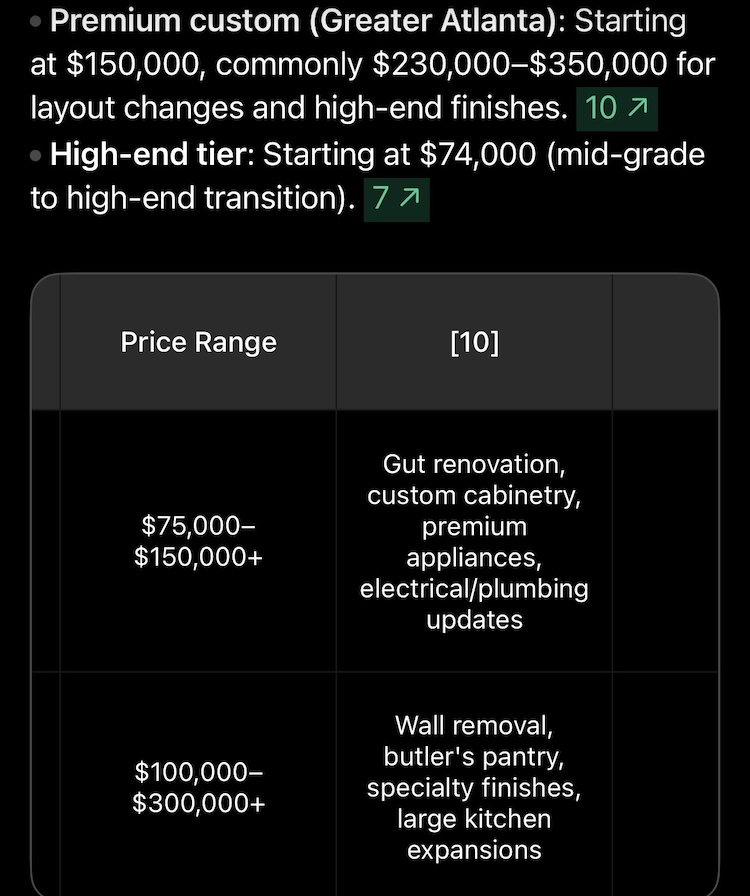
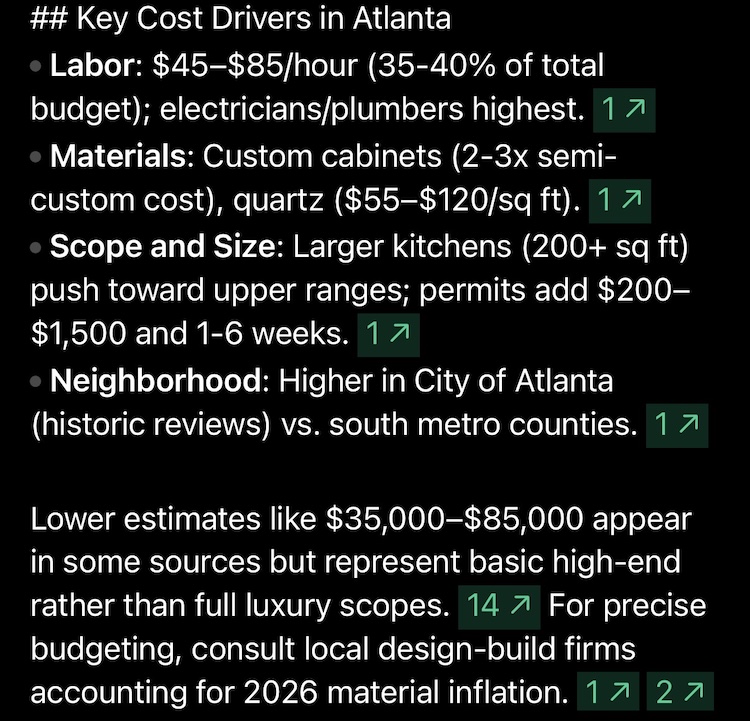
I would like to address my thoughts on this subject as a right-brained designer, which may or may not be as linearly motivated as many left-brained folks would like, but I will do my best. One of the biggest questions that I get asked when I first meet a potential client is “How much is this going to cost?” This question is often asked before we have designed anything, and it typically involves an uncomfortable discussion about average project costs.” For example, consider a full-custom kitchen renovation versus a cosmetic one. This is a very important discussion that needs to happen, but a potential client must complete additional steps before receiving this information. They must know their own budget. (Chicken and egg?) By that, I mean they should research the likely cost and then determine what they are willing and able to spend. With some research and especially with some AI prompts, you can get a starting point. For example, I asked my AI pal, “How much does it cost to do a custom high-end large kitchen in Atlanta?”
This is what I got:
Sure, this is a huge range, from 75k to 300k! But there is some valuable information there. Then I ask: Am I willing and able to spend this much money on this particular project? If so, how much, and how will I get this entire amount, plus an additional 25-30% for what-if contingencies? Do I have this budget available, or do I need to get a home equity loan? Is this investment worthwhile? How much is my home worth now, and how much will it be worth when I sell it? Can I take items with me if I decide to move? There are many questions to consider and discuss with everyone in my home as we share this important decision. Take time to do the homework, and we will be on our way to a much more successful project.
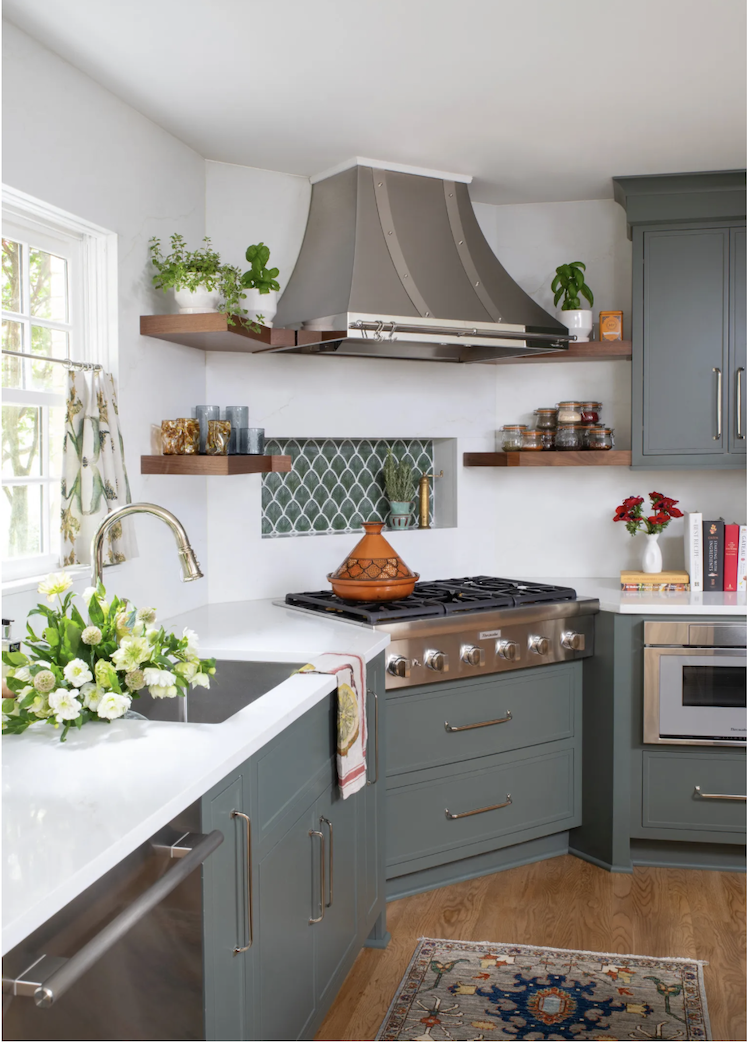
So let’s say that you now have a budget number in mind. The moment of truth-you need to share it and share it often, with your architect, your designer, and your contractor, etc. And they need to do their homework to understand whether what you want and your budget are congruent. If not, hopefully, they will problem-solve to offer options that align with your expectations and your budget. This takes time. It also takes many questions to understand your pain points. Returning to our kitchen example, perhaps you hope to add a 6-burner stove and hood instead of your existing smaller option. And maybe those Wolf red handles on the stove are worth it to you! This information is important for understanding your priorities and whether we can make it happen.
However, I do not recommend creating your budget from the ground up. For example, if you want to transform your living room furnishings, please don’t make a spreadsheet for the cost of the rug, sofa, chairs, side tables, etc. That is the designer’s job. Why? She is working with your overall budget to create the magic, and because your spreadsheet often omits items like rug pads, electrical work, painting, wallpaper, and window treatments. Yet these items are often critical for a complete transformation. So she may use high/low and save/splurge tricks to create a high-end look with a smaller budget.

This leads me to my next point. Over time, you need to trust your designer. A good designer must know that staying within the stated budget is her fiduciary duty. If the budget starts to stray, she needs to have the difficult conversations to explain why and create a game plan. Open conversations, although difficult, build trust and make everyone more content. That is not always easy.
So here we are. Do you feel any clearer on the budget question? Was it worthwhile? This is your home and your money, and you are in charge of them. Work with your designer to set expectations and also consider your budget needs to expand so you can achieve your vision.
Phew! We navigated this conversation together, and I would love your thoughts. Is there anything important that I left out (probably!) Email me at stephanie@balancedesignatlanta.com. These decisions can be a beautiful investment in your home, creating a space that brings you joy, fits your lifestyle, and makes you proud. Let’s create that transformation.
Until next week,
Stephanie