An Interior Designer’s 10 Best-Kept Secrets To A Beautiful and Functional Home.
9/30/26

Hello friends,
After 25 years in Interior Design, I have decided to share ten of my best-kept secrets to create a home that looks considered and personal, yet functions beautifully. Why? Because once you know, you know, and you can exponentially improve your home just by following these rules. Sometimes you may want some additional assistance, and that’s where we come in! But first, here are the secrets that I will share with you, because I care about you.
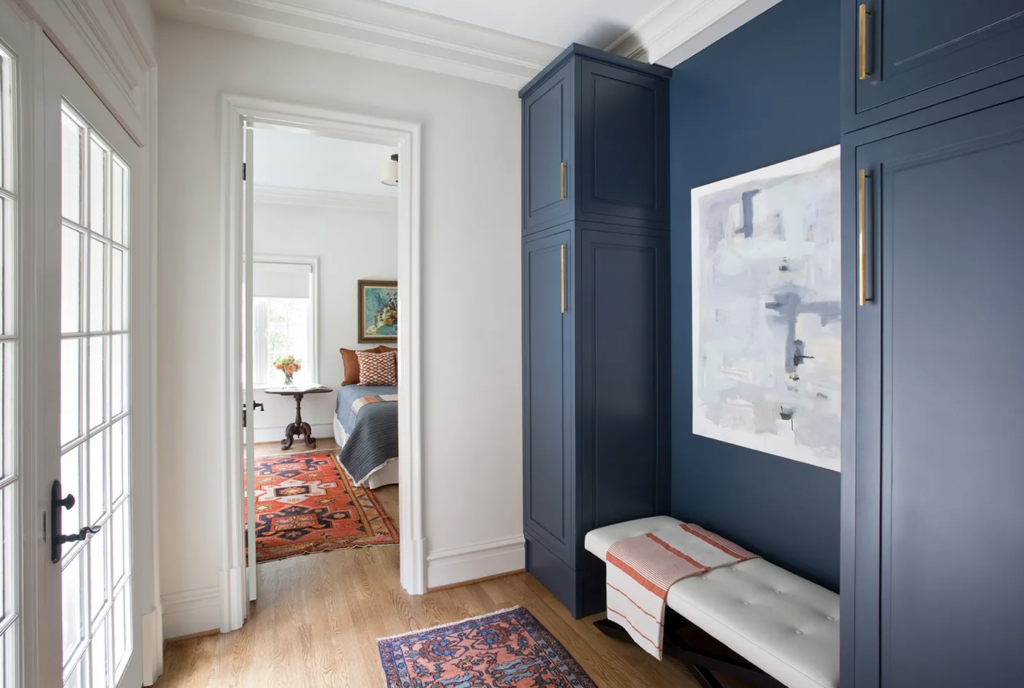
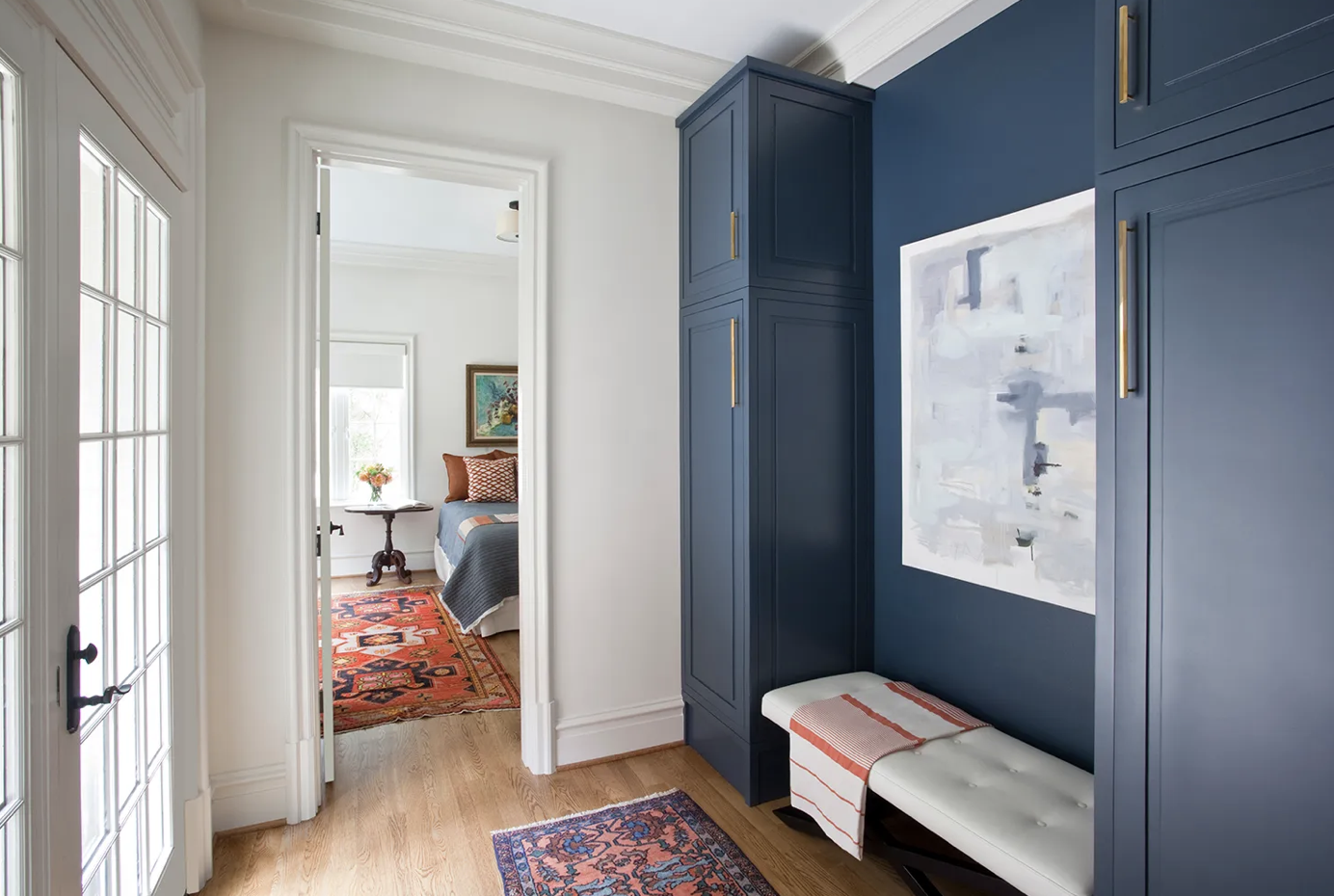
This is a foyer featuring Benjamin Moore White Dove and Farrow and Ball Hague Blue. Photography by Christina Wedge.
1. Paint is the biggest bang for the buck! A new color palette that flows through your entire home, covers the wear and tear of everyday life, and creates a feeling- a vibe as soon as you walk in the door. This may be light and airy, dark and moody, or somewhere in between, like fresh and nature-inspired. I like using the Farrow and Ball color palette because they flow so beautifully between each other. (Whether you invest in this beautiful paint or use it for color guidance with a different brand is your secret.) A couple of other secrets:
Favorite white: Benjamin Moore White Dove (a warm white that works in most spaces),
Favorite blue: Farrow & Ball Selvedge (works with everything like a great pair of blue jeans).
For a moodier look, try Farrow & Ball Hague Blue.
Favorite green: Sherwin-Williams Acacia Haze (a gray-green that reads sexy and sophisticated).
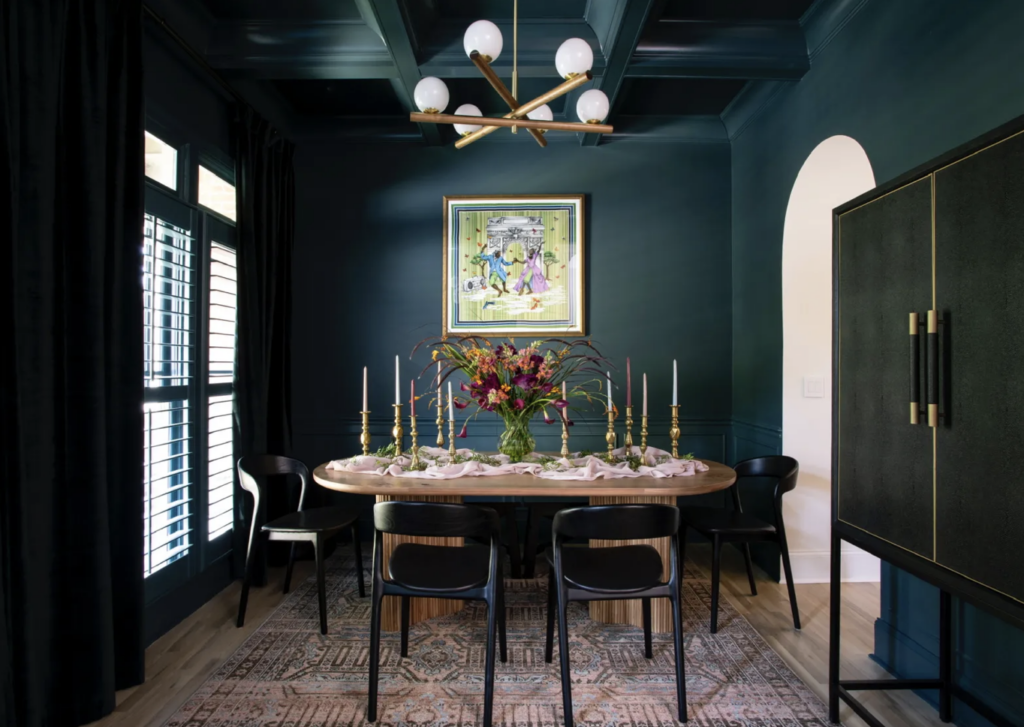
This lovely little dining room brought all the drama with color on the ceiling, trim, and walls. Photography by Christina Wedge.
2. When you are painting, don’t forget your trim and ceiling for a cohesive look. I love it when the walls and trim are the same color, with only the finish changing. Walls are typically flat, and trim is semi-gloss. Now you have a choice to make: the ceiling can match the same color in a flat finish; it can be BM white dove; or it can be a coordinating color that surprises a bit, but never, ever do “ceiling” white!
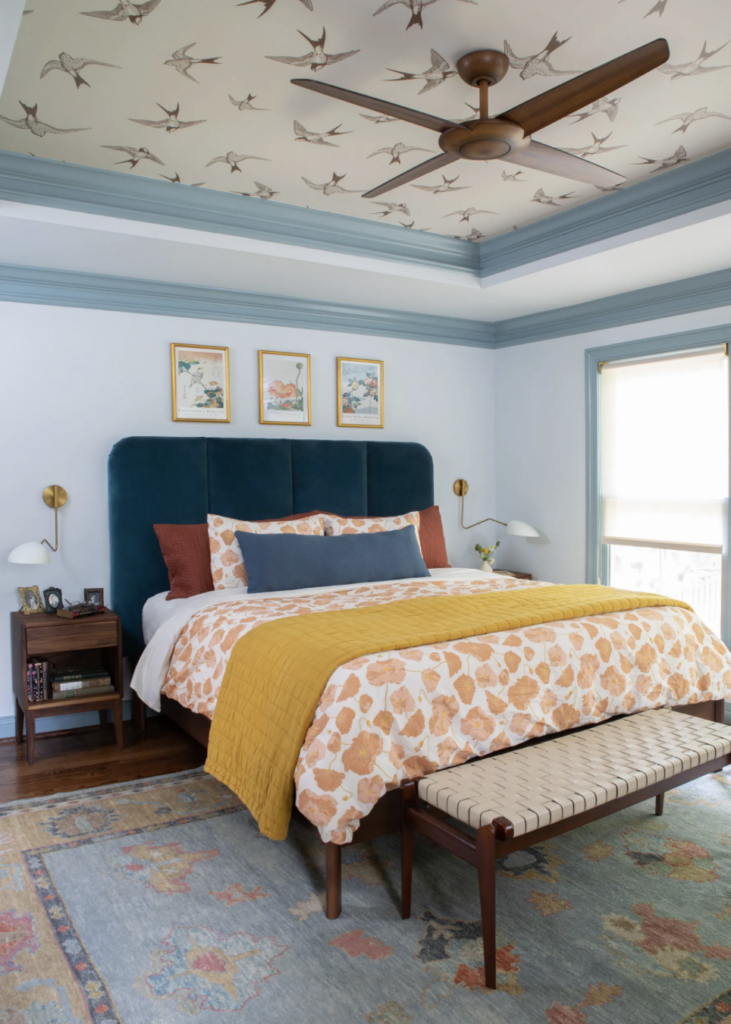
Wouldn’t you just love to go to sleep with these birds on your ceiling? Photography by Christina Wedge.
3. Don’t forget the possibility of wallpaper! Wallpaper can go on the ceiling or on the walls (I especially like it on the dining room ceiling for you and your guests to admire). Wallpaper takes time to choose, so take your time, get samples, and see what flows with your paint. My favorite places to wallpaper are intimate surprises: powder rooms, water closets, behind a bookshelf, or on a ceiling.
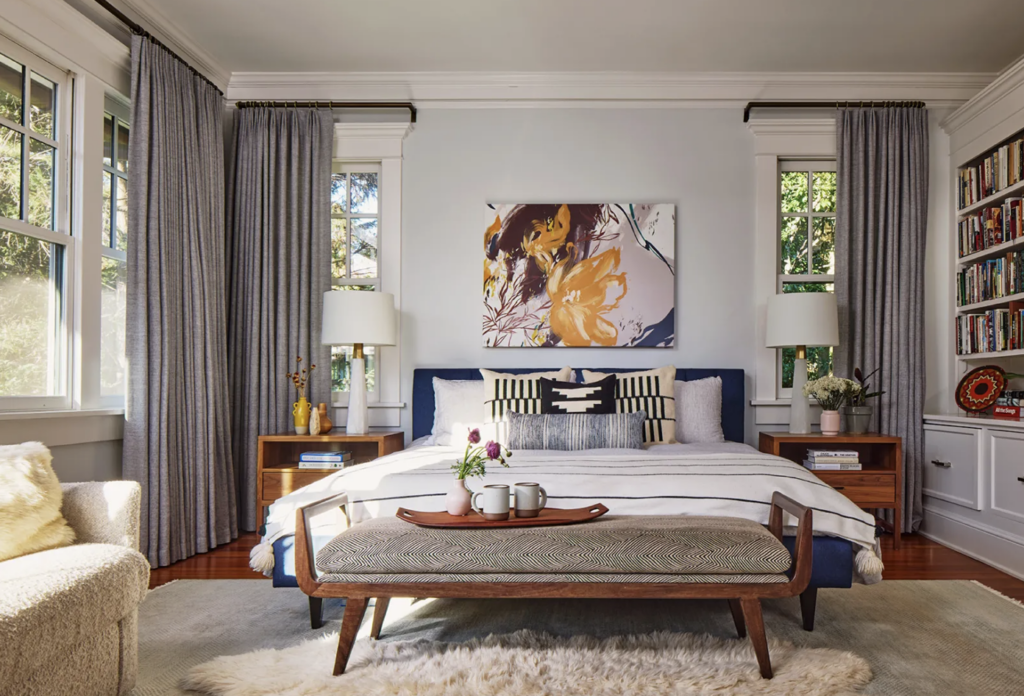
Your primary bedroom is your sanctuary; take time to design it perfectly for you-good bedding, window treatments, lighting, nightstands, coffee, and a cozy place to sit. You deserve this! Photography by Mali Azima.
4. Speaking of bedrooms, make your primary bedroom important. So many of our clients save this room for last because guests don’t see it often. However, you spend quite a bit of time there, and it supports a vital aspect of our health-our sleep! Don’t let this room be an afterthought! Pay attention to your bed, nightstands, lighting, and, most importantly, your bedding. Your bedding needs to be a natural material-cotton or linen- needs to be changed weekly, and needs to beckon you to come to bed.
Little tip from a recent favorite book: create an intention tray for sleep. Get a small tray for your nightstand, and add a natural aromatherapy spray for your linens, a silk eye mask, your favorite book, and even an affirmation like “I care for my body and my mind with a beautiful night’s sleep”. Very important element: your phone is not on your tray; it is charging in another room altogether!
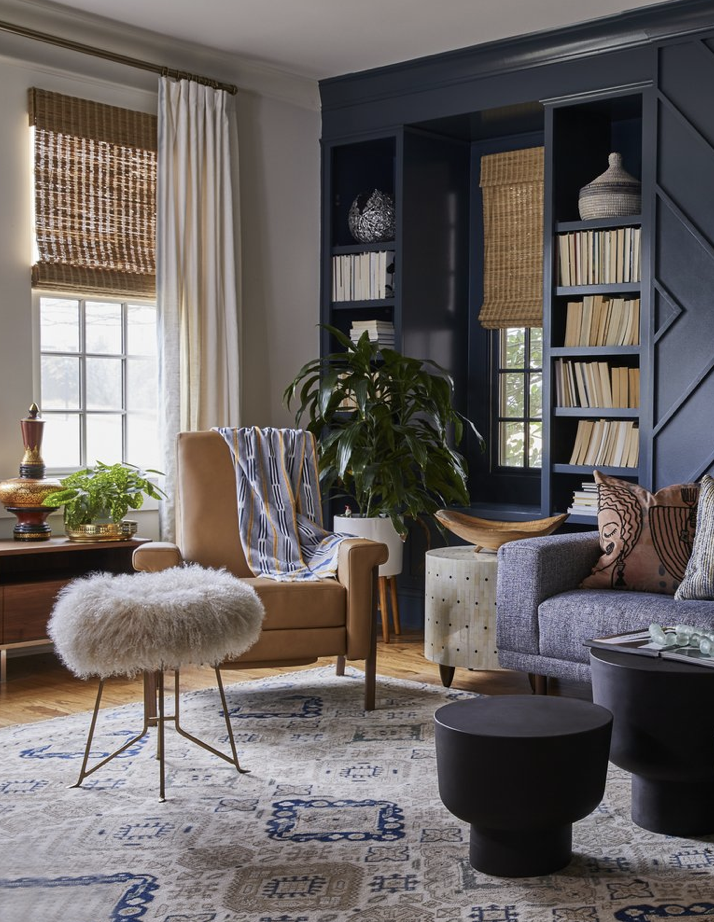
This chair is a recliner! The perfect spot to relax and take care of yourself. Photography by Christina Wedge.
5. Speaking of personal spaces, create a space just for yourself. This space takes care of you. It gives you room to read, put your feet up, and enjoy your beverage of choice. This space must have these elements: a comfy place to sit, a lamp, a side table, a place to put your feet, and it may also be a place to support your hobbies-art, reading, puzzles, anything that you find relaxing and nourishing. Don’t let everyone in your home have a personal spot except you; this is a common problem among the women that I work with. And you deserve better!
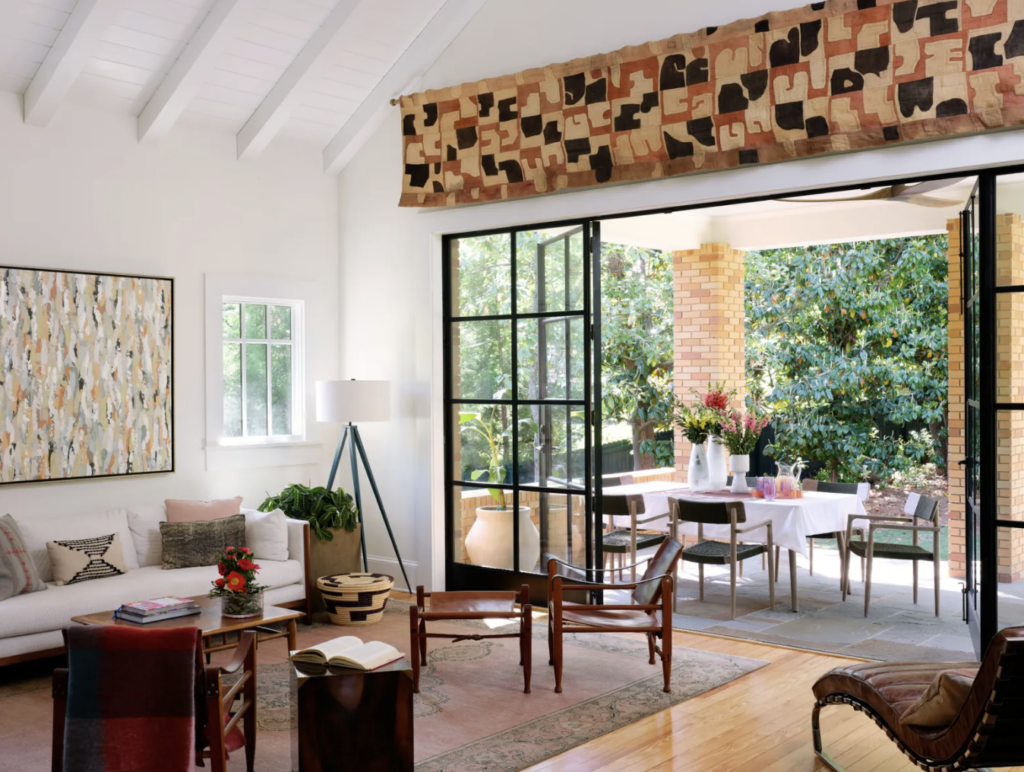
These black iron doors punctuate the crisp, clean feeling of this living room. Photography by Mali Azima.
6. Consider a touch of black in each room. Not too much, because a little goes a long way. Black adds a layer of sophistication that you can’t quite put your finger on. I like to use it on railings, mantles, side tables, art, and even doors. My favorite black is Farrow and Ball Pitch Black.
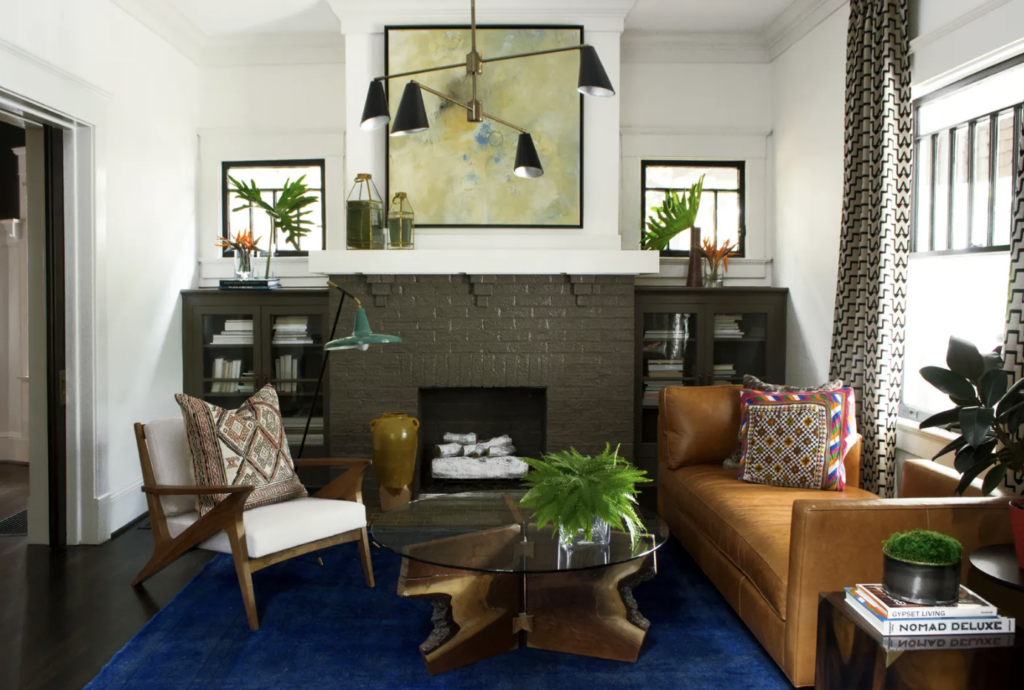
Notice the touches of black in the chandelier, the vintage green lamp, and the handmade coffee table? Photography by Christina Wedge.
7. Make sure every room (yes, every) has a vintage piece in it. It could be a chair, rug, dresser, table, or lamp; this helps create a collected feel. Even in the bathroom, you can add a vintage Turkish runner, an old brass hook, or a soap dish. This vintage addition adds variety and surprise, and shows that you didn’t shop in one place or at one specific time to buy your furniture. This is a secret I swear by!
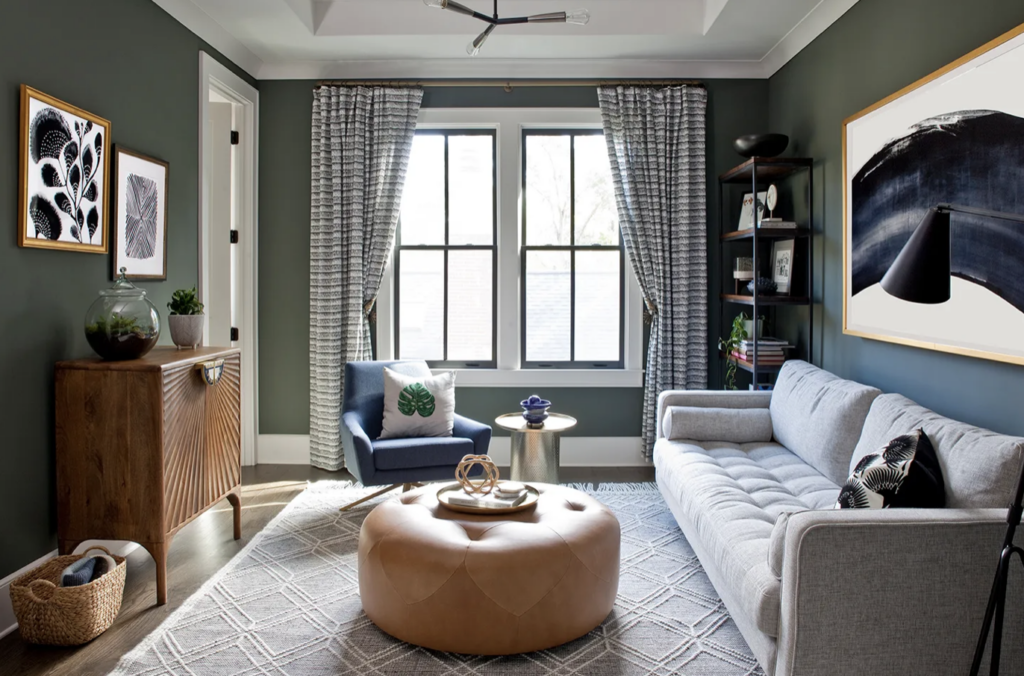
The height of the art above the sofa and the console makes the vignette work together. Photography by Christina Wedge.
8. Consider the height of the art on your wall. The rule of thumb is that a piece should be around 60″ from the floor to the center of the piece. Also consider the items below the art; for example, if you have art above your sofa, you want to read the sofa and the art as one grouping, not the sofa and then your art way above it. Depending on your ceiling height, allow 12-18″ above the back of the sofa. The same goes for art above your mantle or over a console; you are creating a triangle, so those pieces of art relate to what is below it.
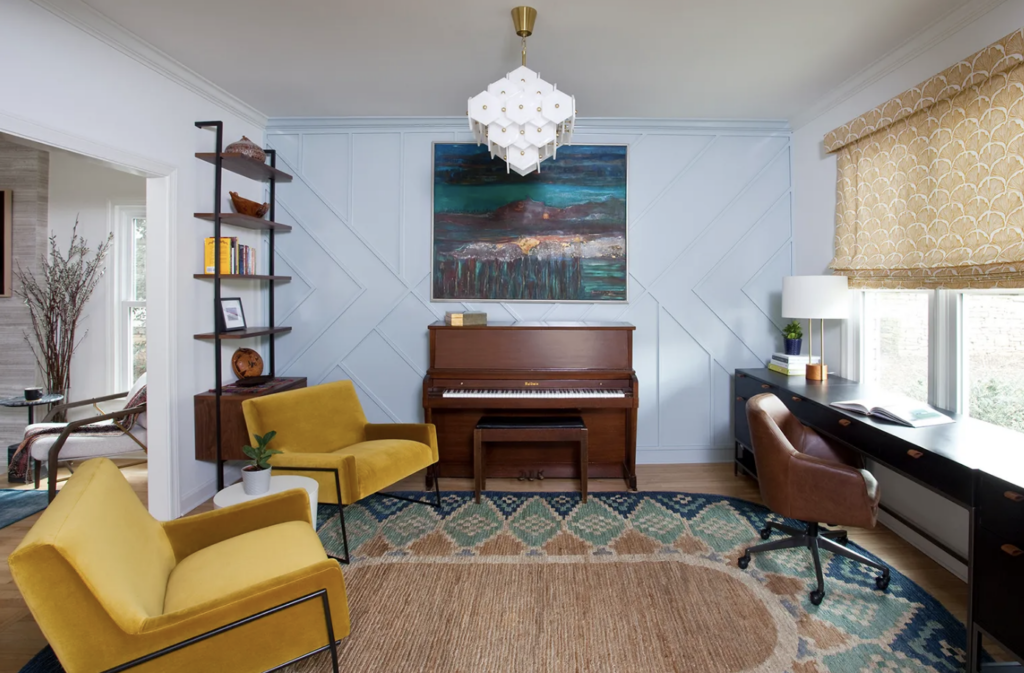
These homeowners collect their art from Peru. Photography by Christina Wedge.
9. Speaking of art, take your time to collect it. No IKEA, HomeGoods, or impersonal art from some unknown place. In my opinion, it is better to have no art than to have meaningless art. Each piece needs to speak to you and have a story that you care about. Take your time, go to art fairs and festivals, museums, art galleries, and perhaps have a conversation with the artist. Find out their story, or the story of the piece. Become a collector, even if it is prints of something that you like. My favorite thing is to find street artists when I travel. Often I will bring it back in a rolled tube, and then have it framed here in Atlanta. Don’t forget that art is more than framed pieces; it is sculpture, pottery, mobiles, lighting, pretty much anything that you find beautiful.
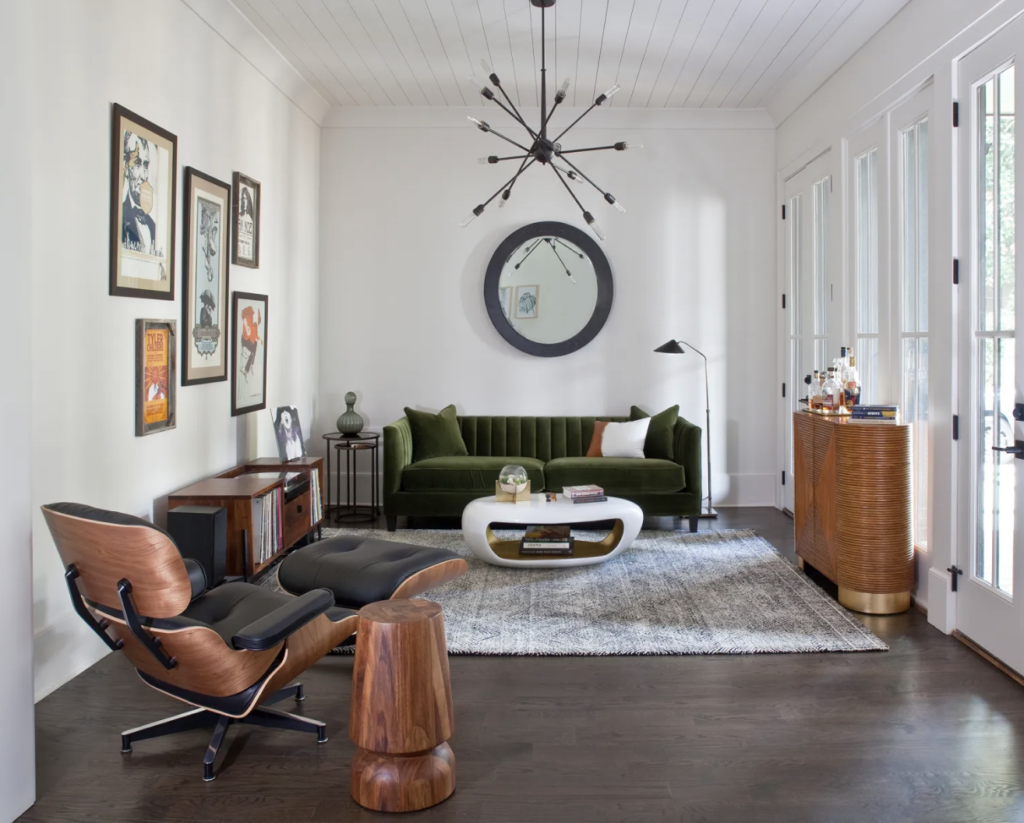
Taking their time, this client invested in their dream Eames Chair. Photography by Christina Wedge.
10. My biggest transformative secret after paint is to take your time and buy quality pieces. Don’t worry about having your home “done”. Your home is never done; it is simply evolving. Taking your time means understanding each room’s scale and flow. This helps you avoid regretting a purchase or acquisition. Ideally, your furniture will be made from natural materials, as it has been for the last millennium. These materials include 100% wool rugs, wood, cotton, linen, glass, stone, and woven grasses. One budget-friendly option is to shop consignment and vintage. I’ve acquired many items for my home this way, and I love how it all comes together.
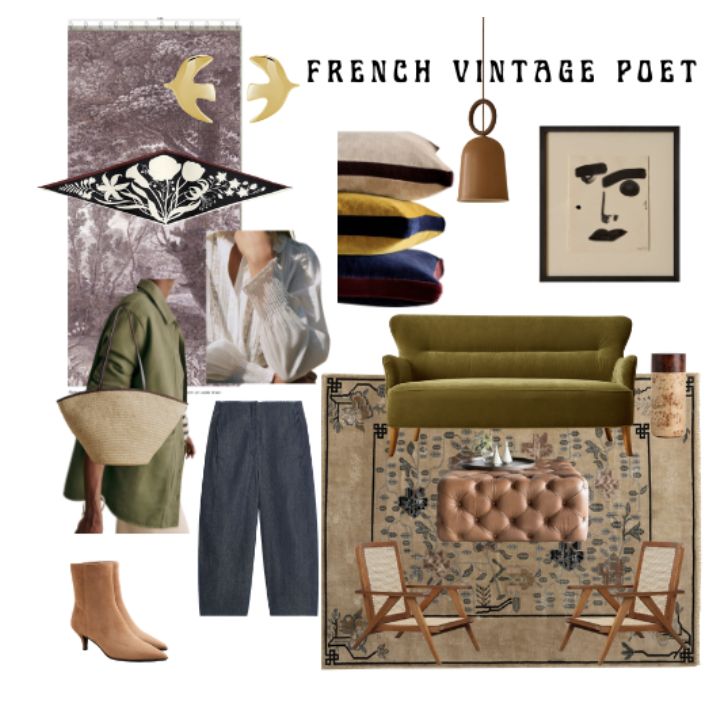
Here is my personal style block, created using ideas from this blog post on how to access your personal style.
11- Bonus tip: Use Pinterest to better understand your personal style. I have a blog post here about developing your personal style. Here is what I do. I think of adjectives I want to use to describe myself, then add the room I want them reflected in. So for me: French-inspired, vintage, colorful living room, and voila photos of ideas. If I don’t love the photos, or I want more ideas, I change the adjectives: Global, scholarly, collected living room. Have fun, and learn more about what you like, what you don’t like, and how to incorporate your style into your home and your wardrobe.
These secrets and tips aren’t buried treasure, but they work! Keep this list on your fridge, and occasionally look at it and see if there is anything in your home that you want to improve. Again, it is supposed to be fun, so take your time and enlist help if you want it. I am here for you, and I look forward to seeing where you take it!
Until next week,
Stephanie