Book Review: Home Therapy: Interior Design for Increasing Happiness, Boosting Confidence and Creating Calm by Anita Yokota.
Hello friend,
Hope that you are enjoying this fresh Autumn weather! I admit that recently, I have been feeling even more overwhelmed by the headlines. The non-stop news, social media, and fear-stoking have been incredibly difficult this summer. So rather than starting this blog negatively, I wanted to share some ideas to support both of us. This post is inspired by a book that I recently found at Barnes and Noble, called *Home Therapy: Interior Design for Increasing Happiness, Boosting Confidence and Creating Calm* by Anita Yokota. She brings a unique perspective, having spent 17 years as a marriage and family therapist before moving into interior design.
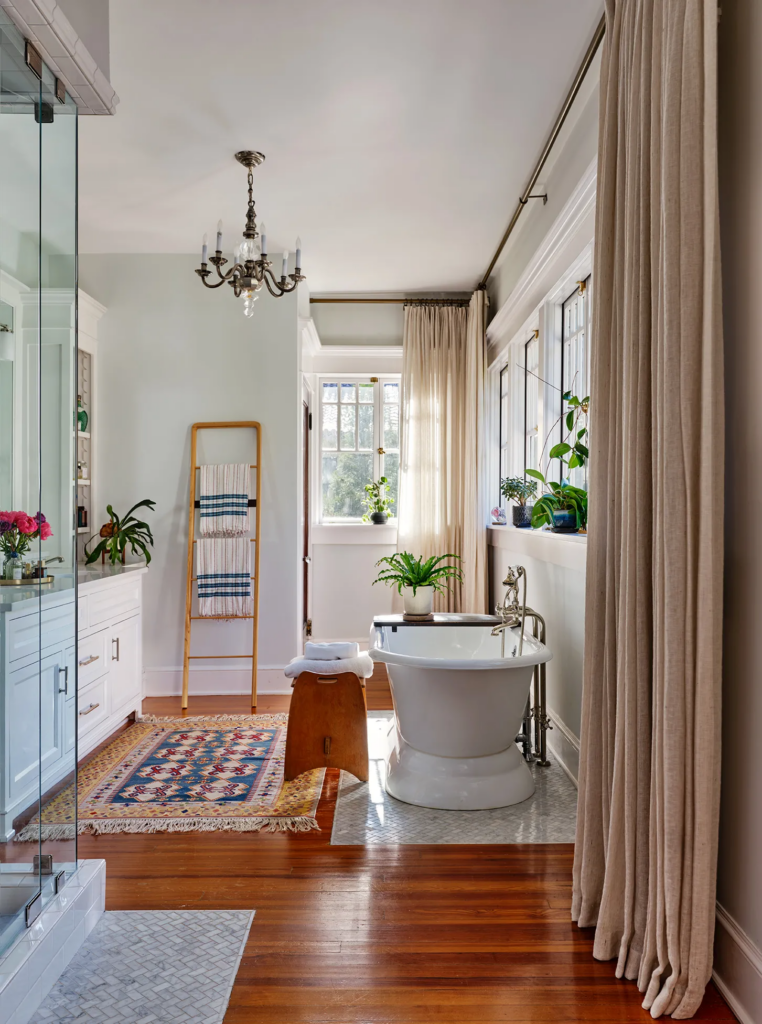
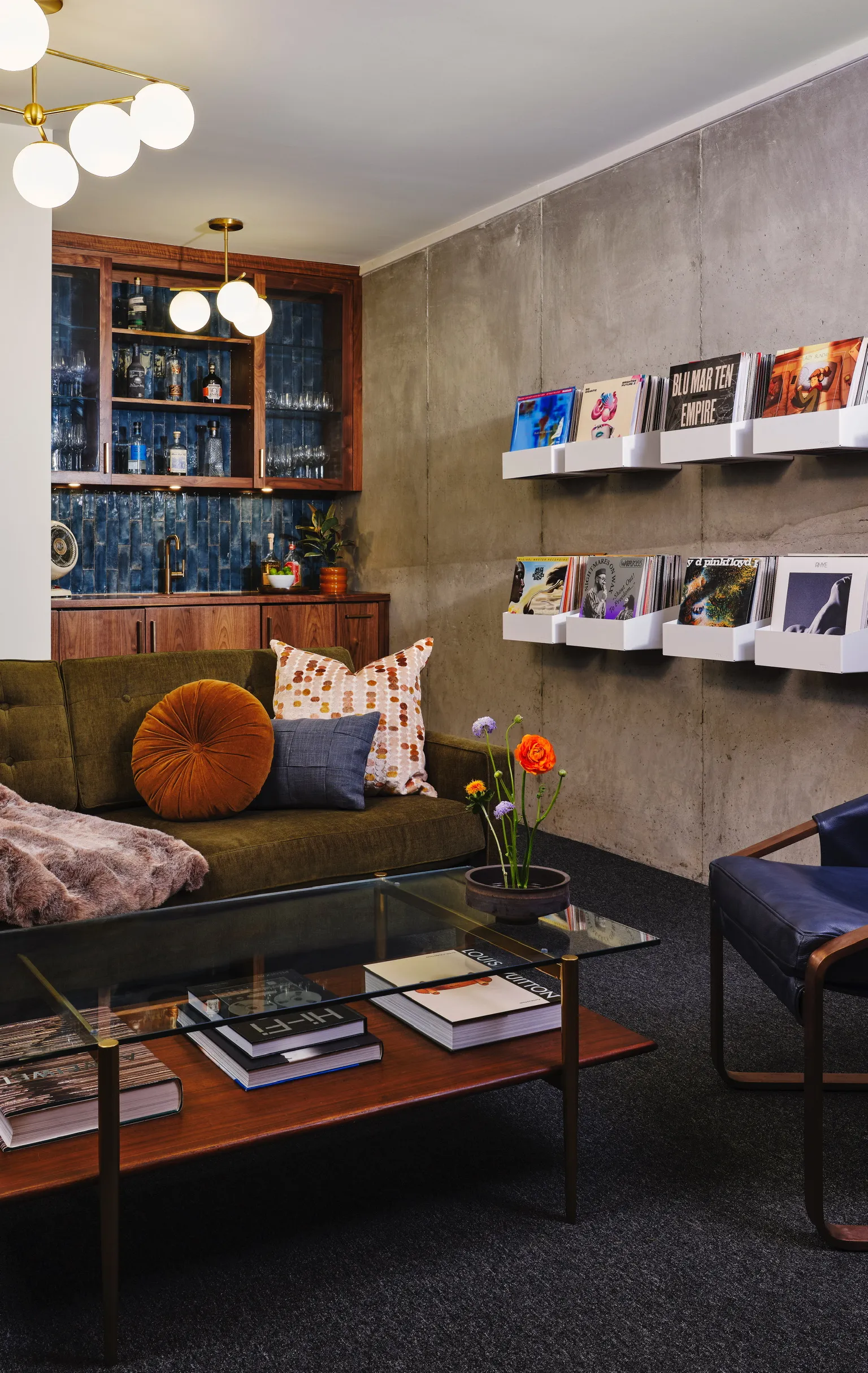
I would love to soak in this tub; so restorative. Photography by Mali Azima.
The relationships we form with clients are often deeply personal, and we even sometimes feel like we are in a therapist role. This book brings to life the many ways that our homes can improve our quality of life. I felt like I learned methods to positively reframe these conversations and to use some of her ideas in my designs. Anita calls her process the Home Therapy Method. She says there are common “domains” in every home, all around the world. They are part of being human. These ” 4 domains” are:
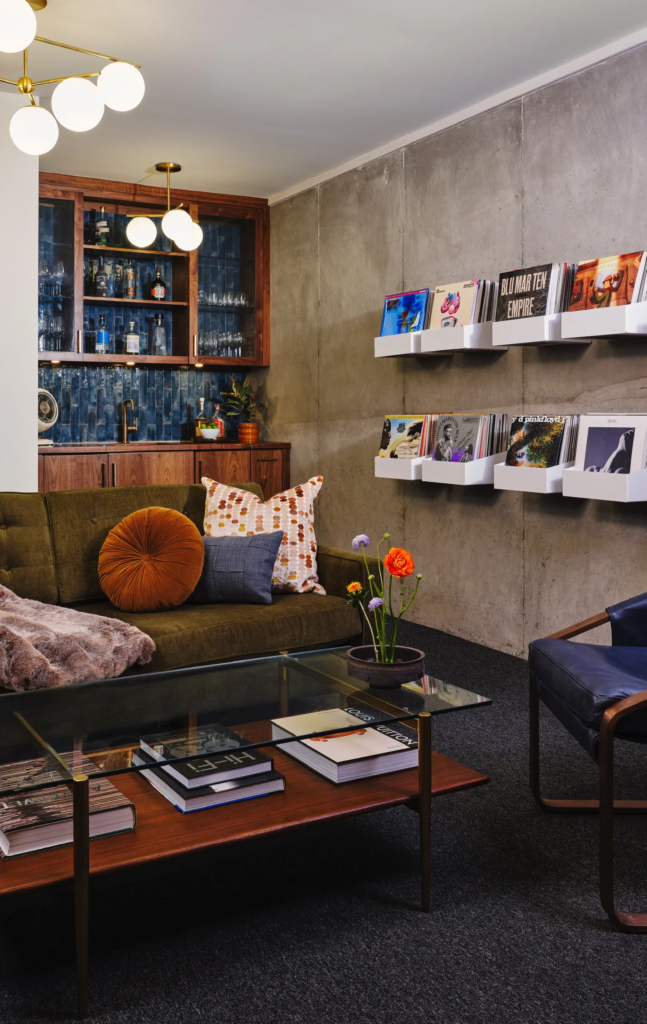
This West Side listening room fits in the “individual,” “organizational,” and “renewal” domains. Photography by Christina Wedge.
The individual domain: This is how to create spaces to rest, relax, recharge, create, dream, and actually connect with your purpose. For example, I am currently writing to you from my favorite spot on my green sofa, with my coffee, my notebook, and my favorite pen. My favorite books are beside me, and I have a great view of the backyard. Having this space and taking time each day to use it is one way I connect with my passion for writing and work on my connection with you.
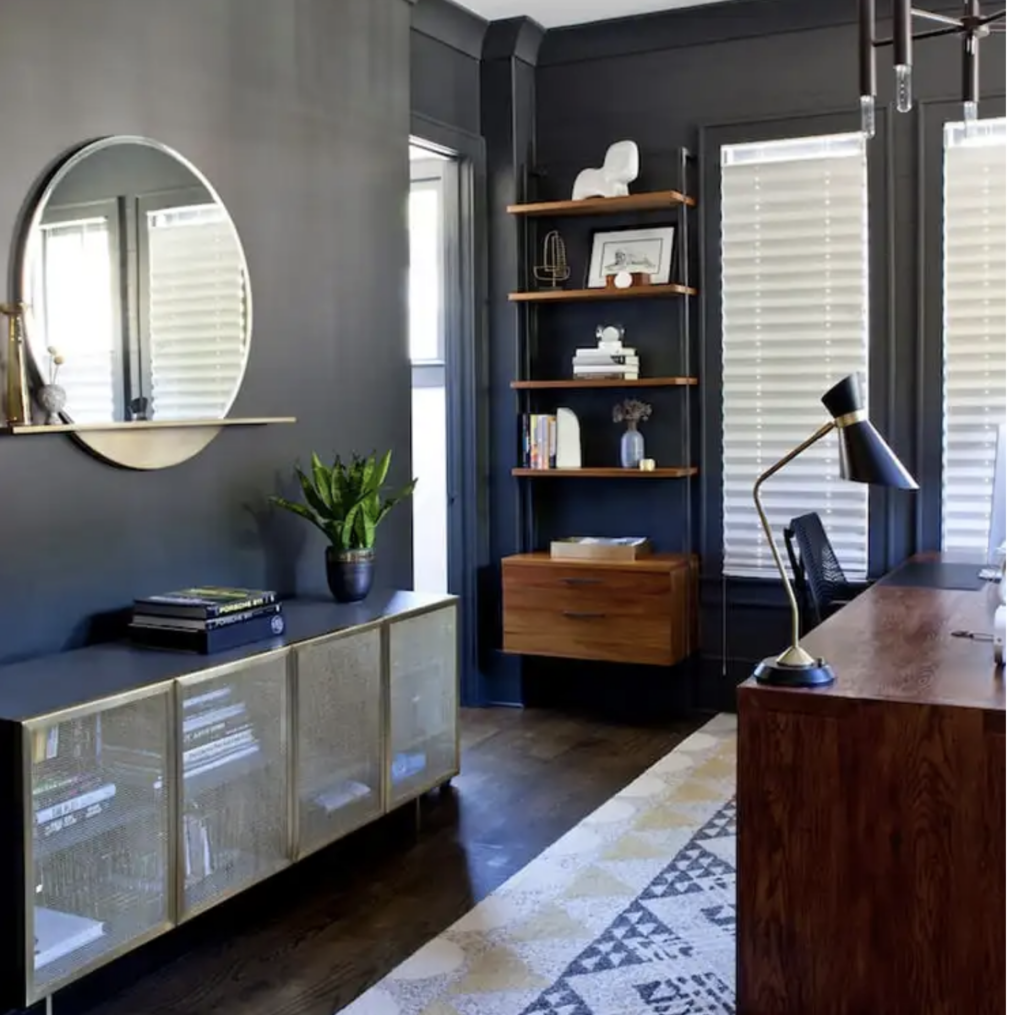
Organization is key in a home office. Photography by Christina Wedge.
Anita suggested an easy way to start this connection with yourself: making intention trays. An intention tray is simply a tray that may have an affirmation and a few items that get you to a particular positive action. For example, on my coffee table in front of me is a brass tray with Japanese incense, a meditative book, and a little lizard my business coach gave me. The lizard represents my lizard brain of all-or-nothing and reminds me that life is not black or white; it is much more nuanced. An intention tray for better sleep may include a silk eye mask, earplugs, a great book, an old-fashioned alarm clock, and a little wave sound machine. No phone is on this tray because we have consciously chosen to charge it in the kitchen. An intention tray for conscious eating may include a bowl of fruit on a cutting board next to the fridge, with a positive affirmation about the clean foods we choose to put in our bodies. I loved this idea, and thought it could apply to so many areas of my life and make my home look lovely in the process.
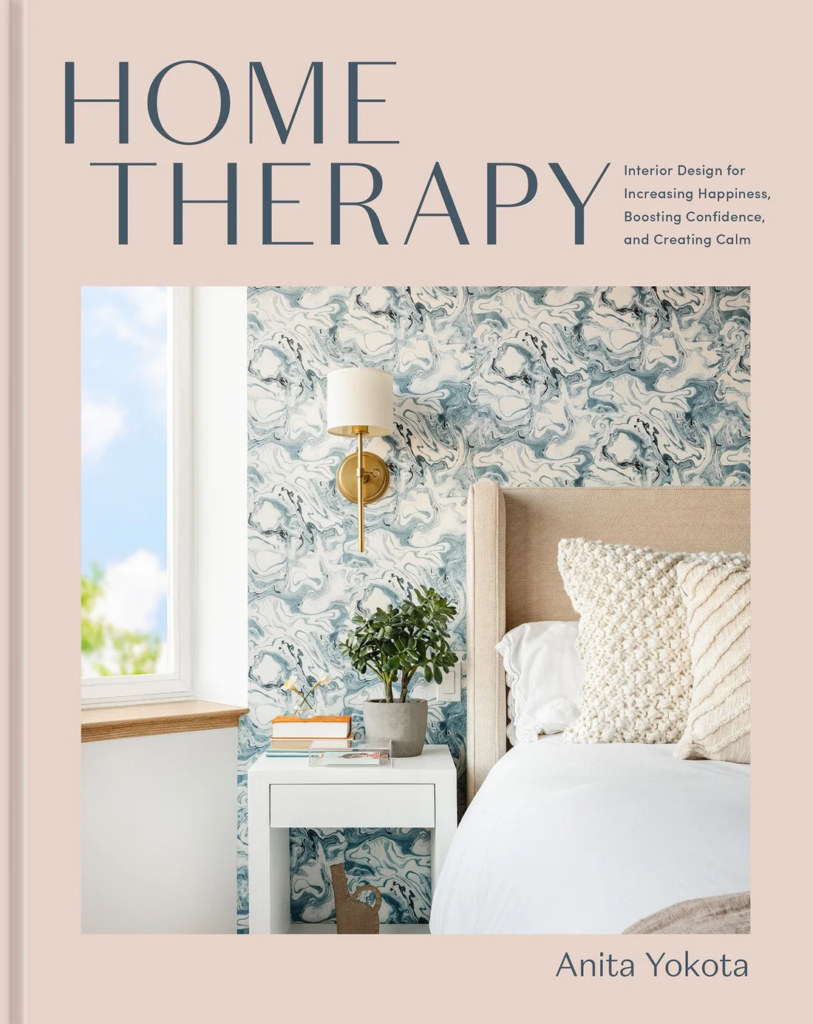
From the book Home Therapy.
The Organizational Domain: Like the Marie Kondo method of sparking joy, Anita believes (and I agree) that simplifying our lives by removing unwanted clutter gives us a better sense of control and increases our efficiency. She also talked about organizing personalities: the savers and the tossers. Each personality has different rules when organizing through her “box” method. The box method encourages you to take a box or basket into a room, clear it of all items that don’t belong there, and put them in the box. Next, remove any items you don’t find useful or beautiful and put them in the box or basket. Then sit with the possibly uncomfortable emptiness of this space. If you are a “tosser” personality type, keep the holding box for 48 hrs before you let items go. A tosser often doesn’t have a sentimental story behind things and can easily let something go. I am definitely a “tosser,” and so is my daughter. The downside of being a tosser is that I can often buy the same things over and over, perhaps because I didn’t want to spend the time developing a new organizing method to give something necessary a spot. I have done this with a toaster, a microwave, and other kitchen gadgets, and it drives my husband nuts! The “saver” type has a story about every item, even the smallest, seemingly insignificant piece. So if you are a saver type, you may rationalize your saving tendencies as being frugal, sentimental, or simply experience guilt when you let go of items. The saver type should keep items in the basket for only 24 hours before donating them, so they don’t agonize over them for too long. I really liked this approach because it made me notice my desire to get stuff done fast, slow down, think about what I am doing, and organize with intention (not just stuff it out of sight!). Did I mention “Home Therapy” has beautifully styled photos that make you want to emulate? Yeah-that always makes it better to read!
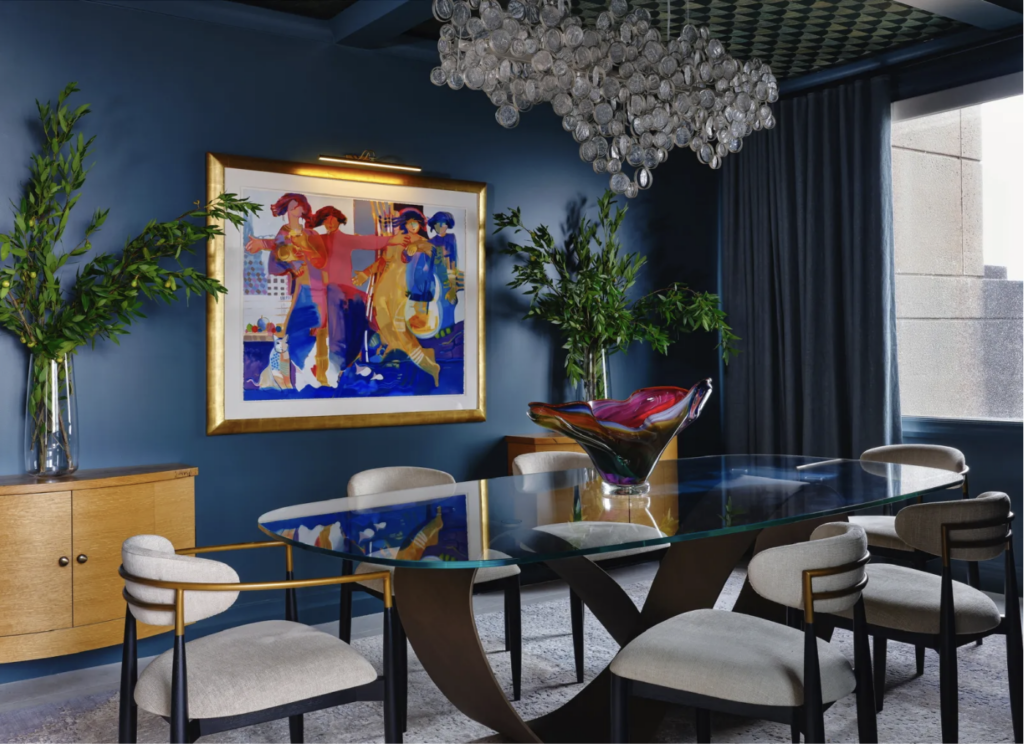
This dining room accommodates regular dinner parties with friends. Photography by Mali Azima.
The Communal Domain: This is the aspect of your home that has to do with family and friends. The techniques for this domain create deeper bonds with the people that you love. This space may address your dining table size and shape, who sits there, and what else you do at the dining table. For me, I work solo here sometimes, have meetings, play games, and eat. Now that we are empty nesters and the kids come over occasionally for dinner, friends come over for dinner and games, and we often have birthday parties here, our table needs to accommodate 4-6 people regularly, and we need enough chairs and seating for the parties to spread out. The communal domain needs ground rules and boundaries in order to be successful. For instance, no phones at the table or phones outside the bedroom at night; you get the picture. The goal is to increase the meaningful time together. Creating spaces where we can flourish together is a worthy goal, and this book taps into that potential in each room.
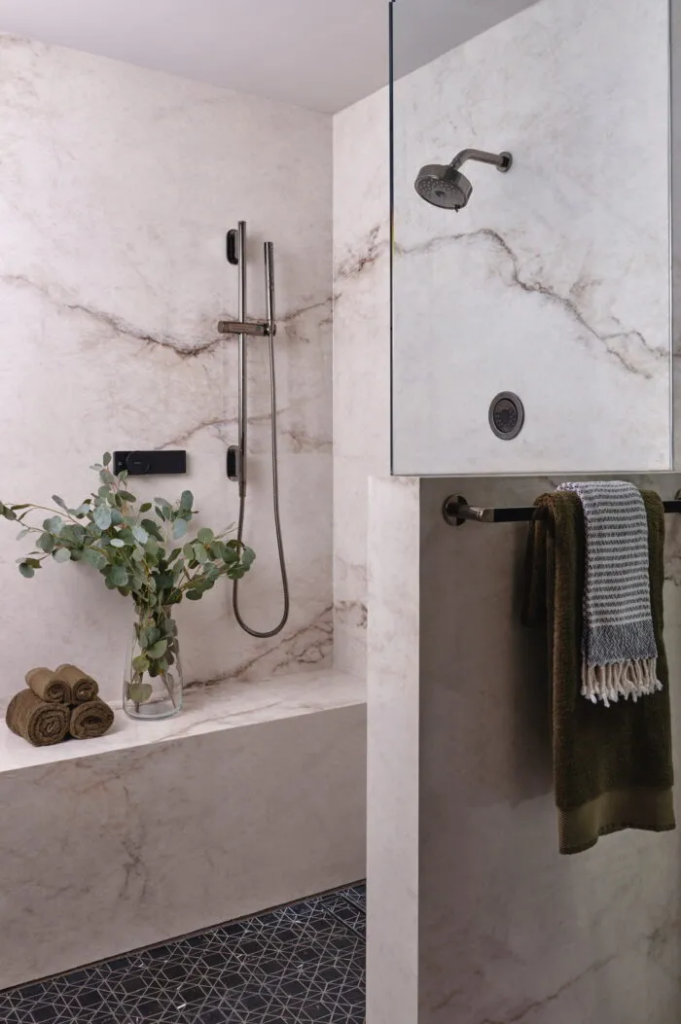
This spa shower enjoys a bench, aromatherapy, and even extra water jets! Photography by Mali Azima.
The Renewal Domain: This domain considers wellness in each room. Heightening our senses and getting off autopilot so that we can slow down enough to enjoy our lives. This may mean taking a long hot bath, enjoying a cup of tea, or sitting down to read; these are all renewal activities. However, it is more than that; wellness can also show up in your color palette, the lightbulbs you use, your sheets and bedding, and even the napkins you use daily. The light (or lack thereof) may influence your decisions about window treatments and how many lamps are in the room. Displaying art and featuring artists you love adds comfort, beauty, and even love to your home.
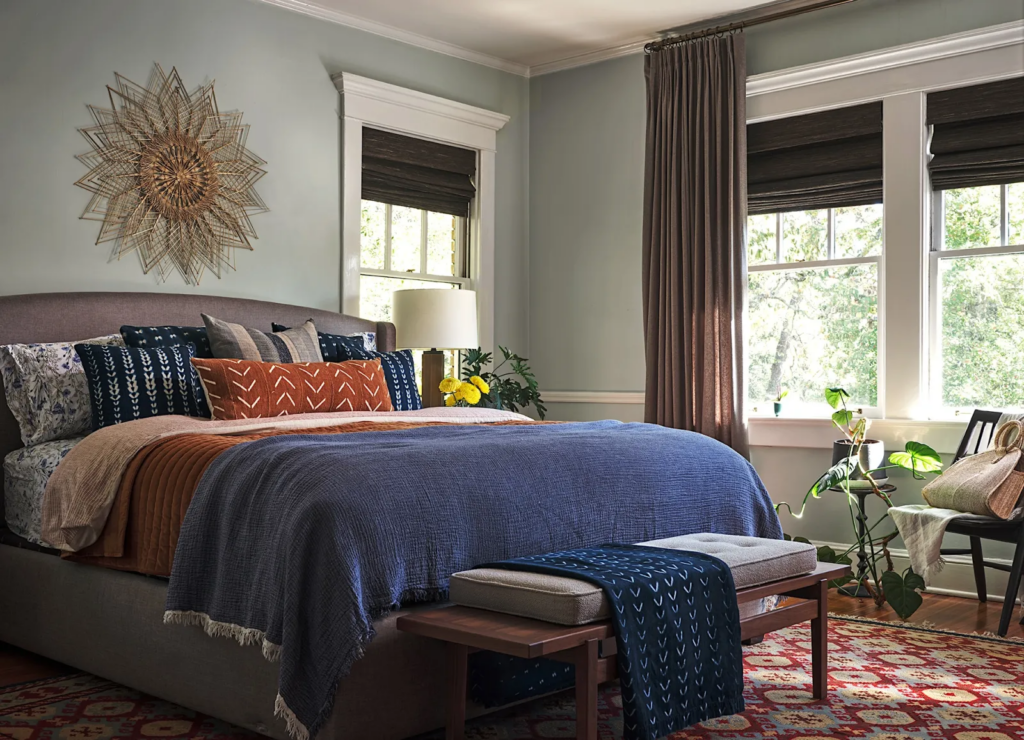
This guest bedroom’s cozy linens, room-darkening curtains, and even a spot for the luggage consider both the “communal” and “renewal” domains. Photography by Mali Azima.
I truly appreciated the insights I got from Home Therapy. I also loved the photography, which kept my attention. As we approach October and then the holidays, I know that I need to recognize the joy that my home brings to me, my family, and my friends. I am also going to try the basket technique and see what I learn. I also found a book that many people may like as a gift! Perhaps I even have a jump-start on the holidays…cue the angels singing! I hope that this autumn finds you taking care of yourself.
Until next week,
Stephanie